
Envelope Budgeting vs. Zero-Based Budgeting: Which Fits Your Family?
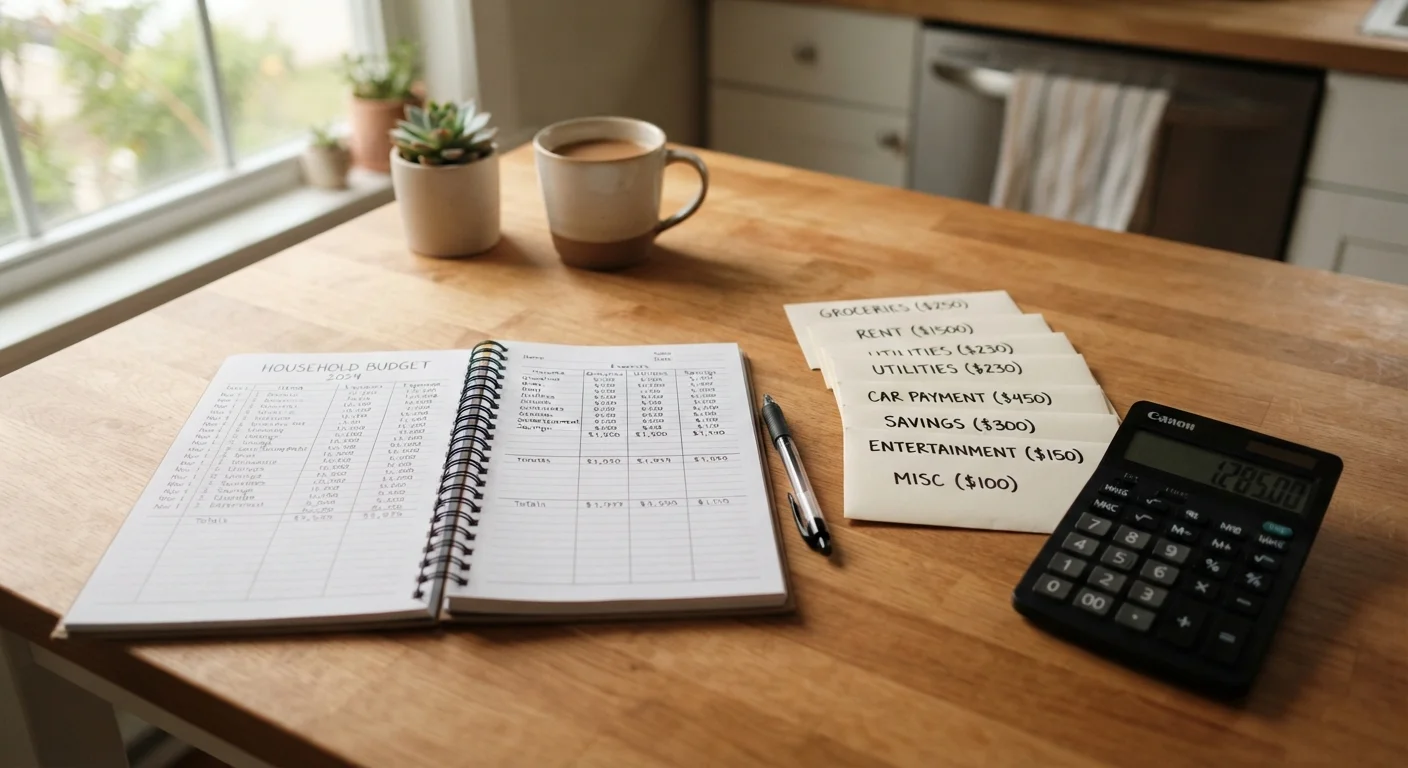
Photo credit: grub-cafe.com
In this article
A clear side-by-side look at two popular household budgeting methods, how each works in practice, and the family situations where each tends to perform well.
Key Takeaways
- Envelope budgeting limits spending by assigning physical or digital cash to fixed categories each pay period.
- Zero-based budgeting assigns every dollar of income a specific job until the balance reaches zero.
- Envelope budgeting works best for families with consistent income and habitual overspending in a few areas.
- Zero-based budgeting suits families with variable income or those trying to accelerate debt payoff.
- Both methods require a realistic picture of household income before they can work effectively.
- Switching methods mid-month rarely works; commit to a full budget cycle before evaluating fit.
How each method actually works
Envelope budgeting divides your take-home pay into spending categories before the month begins. Traditionally, you place actual cash into labeled envelopes: one for groceries, one for gas, one for utilities, and so on. When an envelope is empty, that category is closed for the period. Digital versions replicate this with virtual envelopes inside an app or spreadsheet, but the logic is identical. The category limit is fixed at the start and cannot be quietly exceeded.
Zero-based budgeting starts from your total monthly income and subtracts every planned expense, savings contribution, and debt payment until the remaining balance is zero. That zero does not mean you have spent everything; it means every dollar has been assigned a purpose, including amounts set aside for savings or investments. If income is $4,800, the budget categories must collectively account for all $4,800. Any dollar without a job gets reassigned before the month starts.
The practical difference is where the constraint sits. Envelope budgeting constrains spending category by category during the month. Zero-based budgeting constrains allocation of income before the month begins. Both require you to know your income reliably before you can build the plan. See how to map household income accurately before committing to either approach.
Side-by-side comparison
The table below compares the two methods across the factors that matter most for a typical American household.
| Criterion | Envelope Budgeting | Zero-Based Budgeting |
|---|---|---|
| Core mechanism | Cash divided into spending categories | Every dollar assigned a job before month starts |
| Setup time | Low, a few envelopes and a payday routine | Higher, full income and expense mapping required |
| Works with card payments | Awkward, needs manual conversion | Yes, digital tools track transactions directly |
| Handles variable income | Poorly, fixed envelopes may not flex | Well, plan rebuilds from actual income each period |
| Savings and debt payoff | Only if a specific envelope is created | Built into plan as explicit line items |
| Spending enforcement | Hard stop when envelope is empty | Relies on tracking and self-discipline |
| Best entry point | Beginners with a specific overspending habit | Families ready to plan every expense category |
One nuance the table cannot capture is behavioral fit. Envelope budgeting uses friction as a feature: running out of cash in an envelope is immediate and visible. Zero-based budgeting relies on discipline at the planning stage, because once money is assigned, nothing physically stops you from spending a card beyond its category.
Where envelope budgeting tends to break down
The envelope method struggles when most household spending happens through debit or credit cards. Converting card transactions into cash equivalents adds a manual step each pay period, and many families abandon the system within weeks. Online bill payment also sits awkwardly outside the physical envelope model.
Irregular expenses are another pressure point. A car registration or annual insurance premium does not fit neatly into a monthly envelope. Families must either set aside a small amount each month in a sinking fund envelope (a separate envelope built up over time for known irregular costs) or absorb the hit from a different envelope, which distorts the whole system. irregular expenses are one of the most common reasons budgets fail, regardless of the method in use.
The method also does not naturally direct attention to savings or debt payoff. Unless you create a specific envelope for those goals, they tend to receive only what is left over, which in practice is often nothing.
Where zero-based budgeting tends to break down
Zero-based budgeting demands more upfront work. You need a complete picture of fixed expenses, variable spending, irregular costs, and savings targets before you can build the plan. Families with highly variable income face the additional challenge of estimating that income conservatively enough to avoid over-allocating in an optimistic month.
The method also requires a monthly reset. Skipping the planning session for even one month can leave the household without a coherent allocation, and old category amounts carry forward in a way that may no longer reflect current reality. A regular monthly review routine helps prevent this from compounding over several months.
For families new to budgeting, the full zero-based worksheet can feel paralyzing. Every spending category requires a number, including categories the family has never tracked before. Starting with rough estimates and refining them over two or three months is a practical approach, though it means the first few cycles will be imprecise.
Choosing based on your household's actual situation
A household with two consistent paychecks, a known set of monthly bills, and a history of overspending on groceries or dining out is a reasonable candidate for envelope budgeting. The hard stop built into each category addresses the specific problem directly. grocery spending is one of the easiest categories to lose control of, and an envelope puts a physical limit on it.
A household with self-employment income, freelance work, or seasonal variation does better with zero-based budgeting, because the plan rebuilds around whatever income actually arrived. Families carrying consumer debt who want to accelerate payoff also benefit from zero-based, since they can explicitly route surplus dollars toward that goal each month rather than leaving them unassigned.
Some families combine elements of both: they use zero-based planning to set category amounts, then track spending with a digital envelope system to enforce limits during the month. That hybrid is more complex to maintain but addresses the enforcement gap in zero-based budgeting without abandoning its comprehensive planning structure. If debt management is a parallel concern, understanding how different payoff strategies work will help you build that into either budget method.
This article is for general informational purposes only and does not constitute personalized financial advice. Consult a qualified financial professional for guidance specific to your household's circumstances.

Author
Finance Editorial Team
Finance Editorial Team is the collective byline for our editorial team and contributor network. Articles published under this byline or an editorial pen name are researched, written, and reviewed according to our editorial standards for clarity, consistency, and independence before publication.
View all articles →