
Affordable Ways to Insulate a Home: A Room-by-Room Overview
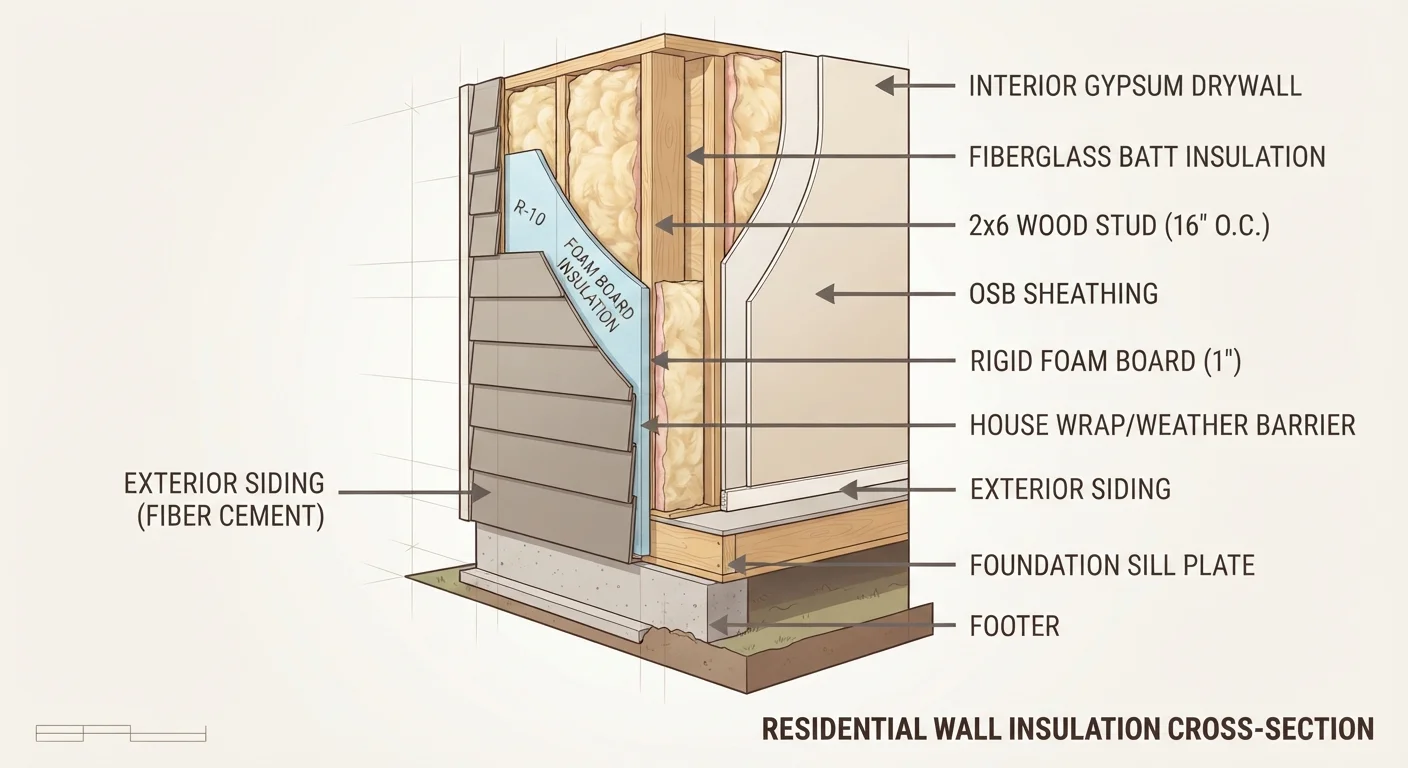
Photo credit: grub-cafe.com
In this article
Insulation options vary widely in cost and complexity. This reference covers common materials, typical coverage areas, and general cost ranges by room type.
Why room type matters for insulation choices
Not every room in a house loses heat or gains heat at the same rate. Attics, crawl spaces, and exterior walls each have different surface areas, moisture conditions, and access constraints. Choosing the wrong material for a given location can mean paying for coverage that performs below its rated value within a few years.
The two numbers that matter most are R-value (thermal resistance per inch of material) and total installed coverage. Higher R-values mean more resistance to heat flow, but the right target depends on your climate zone. The U.S. Department of Energy publishes recommended R-values by ZIP code, which is the most reliable starting point before pricing any project.
Cost ranges below are general estimates based on widely available contractor and materials pricing as of recent years. Actual quotes vary by region, labor market, and project scope. For guidance on how insulation improvements fit into a broader utility-savings strategy, see what families can realistically control on utility bills.
Common materials and their general cost ranges
Fiberglass batts are the most widely installed material in wood-framed walls and floors. They come in pre-cut widths sized for standard 16-inch and 24-inch stud spacing. Installed cost typically runs $0.50 to $1.50 per square foot depending on thickness and whether labor is included.
Blown-in cellulose, made from recycled paper treated with fire retardant, is common in attics and existing wall cavities. It fills irregular spaces better than batts and generally costs $1.00 to $2.00 per square foot installed. Blown-in fiberglass is a similar option with slightly different moisture behavior.
Rigid foam board (polyisocyanurate, EPS, or XPS) is used on basement walls, under slabs, and on exterior sheathing. It has a higher R-value per inch than fiberglass but costs more, typically $0.25 to $0.65 per square foot for materials alone before cutting and installation labor.
Spray foam comes in two types: open-cell and closed-cell. Closed-cell spray foam has the highest R-value per inch of common materials (around R-6 to R-7 per inch) and doubles as an air and vapor barrier. Its installed cost is the highest of the group, often $1.00 to $3.00 or more per square foot, which limits it to targeted applications where its air-sealing properties justify the price.
R-value
A measure of thermal resistance: how well a material resists heat flow. Higher numbers mean more resistance. Recommended targets vary by climate zone and location in the home.
Batts
Pre-cut panels or rolls of insulation, usually fiberglass or mineral wool, sized to fit between standard wall studs or floor joists.
Dense-pack cellulose
Cellulose insulation blown at high density into enclosed wall cavities through small drilled holes. It fills irregular spaces and resists settling.
Thermal envelope
The boundary of a home that separates conditioned interior space from unconditioned space or the outdoors, including walls, roof, floor, windows, and doors.
Closed-cell spray foam
A high-density spray foam insulation with R-values around 6 to 7 per inch. It also acts as an air and vapor barrier. Installation requires licensed contractors due to chemical hazards.
Rim joist
The perimeter framing board at the top of a foundation wall where the floor system meets the exterior wall. A common air leakage point in older homes.
Room-by-room overview
Attic
The attic is the highest-return insulation location in most homes because heat rises and an under-insulated attic ceiling loses conditioned air in both winter and summer. Blown-in cellulose or blown-in fiberglass are the standard choices for flat attic floors because they can be added on top of existing material. Recommended depths for cold climates often target R-38 to R-60. A professional installation for a 1,000-square-foot attic typically runs $1,500 to $3,000 depending on current depth and access.
Exterior walls
Insulating existing closed exterior walls without removing drywall requires dense-pack cellulose or injection foam. Contractors drill small holes in siding or interior walls, inject the material, and patch. This is a labor-intensive process and typically costs $2,000 to $5,000 for a medium-sized home. New construction or a gut renovation allows batts or open-cell spray foam, which are less expensive per square foot.
Basement and crawl space
Basements can be insulated on the interior rim joist (the perimeter framing at floor level) using cut-and-cobble rigid foam or spray foam cans, a manageable DIY task for most homeowners. Full basement wall insulation with rigid foam board or batts adds more coverage. Crawl spaces in humid climates generally do better with a sealed and conditioned approach using closed-cell spray foam rather than open batts, which can trap moisture.
Floors over unconditioned spaces
Floors above garages or vented crawl spaces benefit from batts installed between floor joists. R-19 or R-30 batts are common choices. This is one of the more DIY-accessible installations if the space below is accessible, though working overhead in a crawl space is physically demanding.
Safety, permits, and when to call a professional
Fiberglass insulation irritates skin, eyes, and lungs during installation. Proper PPE (gloves, eye protection, an N95 or P100 respirator) is required for any DIY work. Spray foam requires additional precautions because uncured chemicals are hazardous; most closed-cell spray foam installation should be handled by licensed contractors.
Some insulation work in conditioned spaces may require a building permit, particularly when it is combined with other renovation work or involves spray foam in a sealed crawl space. Requirements vary by municipality. Contact your local building department before starting any project that changes the thermal envelope of the home.
Air sealing and insulation work near recessed lighting, electrical boxes, or HVAC equipment can create fire hazards or ventilation problems if done incorrectly. A licensed contractor or certified energy auditor can identify these problem areas before work begins. Many utility companies offer free or low-cost energy audits that include an inspection of current insulation levels.

Author
Home and Garden Editorial Team
Home and Garden Editorial Team is the collective byline for our editorial team and contributor network. Articles published under this byline or an editorial pen name are researched, written, and reviewed according to our editorial standards for clarity, consistency, and independence before publication.
View all articles →