
Saving Money on Utilities: What Families Can Realistically Control
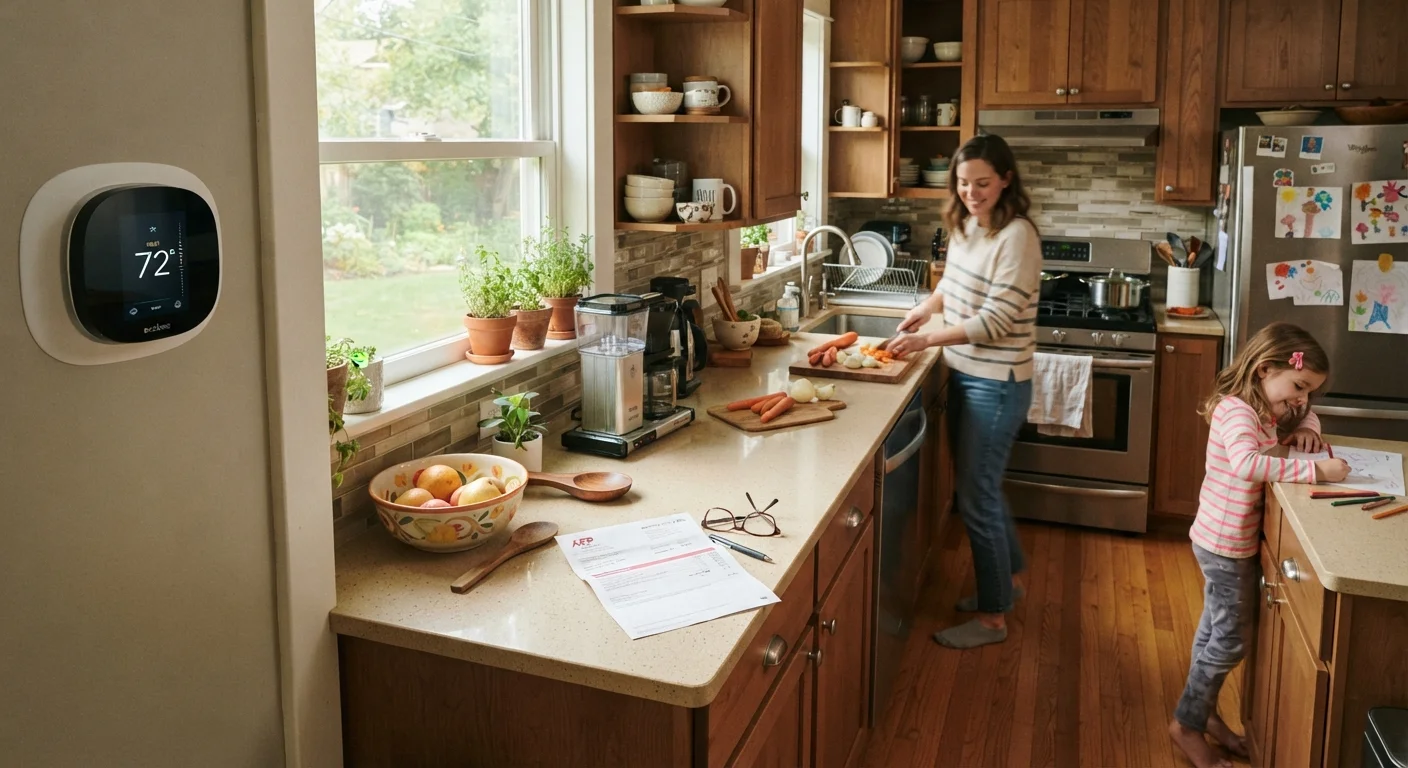
Photo credit: grub-cafe.com
In this article
A practical look at household utility costs, which factors are within a family's control, and evidence-based habits that can reduce monthly energy and water bills.
Key Takeaways
- Heating and cooling typically account for nearly half of a home's total energy use.
- Behavioral changes cost nothing upfront and can produce measurable bill reductions.
- Water heating, appliance use, and standby power are controllable budget variables.
- Scheduling a monthly bill review helps catch usage spikes before they compound.
What actually drives utility costs
Utility bills feel fixed, but most households have more control than they realize. The U.S. Energy Information Administration estimates that space heating and cooling account for roughly 43% of residential energy consumption. That single category gives families the most obvious place to start.
Water heating adds another 18% on average. Lighting, appliances, and electronics make up the rest. Understanding that breakdown matters because each category responds differently to behavioral change versus physical upgrades. You do not need to replace every appliance to move the numbers.
Where families lose ground is treating utilities as a single lump sum on the budget rather than a set of separate, addressable costs. A structured household budget separates utilities into categories so you can see which one is drifting upward each month.
Behavioral changes with a real impact
Thermostat management is the highest-leverage habit available to most families. Lowering the thermostat by 7 to 10 degrees Fahrenheit for eight hours a day, such as during work or school hours, can reduce heating costs by around 10%, according to the U.S. Department of Energy. That figure applies to most forced-air systems.
Water temperature matters too. Many water heaters ship from the factory set at 140 degrees Fahrenheit. Dropping the setting to 120 degrees reduces standby heat loss and lowers the energy needed to maintain that temperature without meaningfully affecting daily use.
Phantom load, sometimes called standby power, refers to electricity drawn by devices that are plugged in but not actively in use. Televisions, game consoles, phone chargers, and desktop computers all contribute. Unplugging devices or using a power strip with an on-off switch eliminates that draw without changing how the household uses those items.
For water use, fixing a leaking faucet is one of the fastest wins available. The U.S. Environmental Protection Agency estimates a faucet dripping at one drip per second wastes more than 3,000 gallons of water per year. That volume shows up on both the water bill and, in many homes, the gas or electric bill tied to water heating.
Appliances, laundry, and dishwashing
Full loads matter with both dishwashers and washing machines. Running partial loads uses nearly the same water and energy as full ones, so the cost-per-dish or cost-per-shirt climbs significantly. Most dishwashers also have an air-dry setting that consumes far less electricity than heat drying.
Washing clothes in cold water works for most fabric types and most stains. Heating water for a warm or hot wash can account for up to 90% of the energy a washing machine uses per cycle, according to the Department of Energy. Switching to cold is a free change with a consistent payoff.
Refrigerator coils that accumulate dust make the compressor work harder. Cleaning the coils once or twice a year is a simple maintenance step that most homeowners can do safely without professional help. Check your appliance manual first and unplug the unit before starting.
Water use inside and outside the home
Showers are the largest indoor water use in most homes, ahead of toilets and faucets. A standard showerhead uses around 2.5 gallons per minute. A WaterSense-labeled model uses 2.0 gallons per minute or less. For a family of four each showering eight minutes daily, that difference adds up across a year without requiring any change in shower habits.
Outdoor irrigation often goes unchecked. Watering early in the morning reduces evaporation compared to midday watering, which means more water reaches plant roots and less is lost. The water-saving practices guide covers how families can reduce garden water use without affecting plant health.
If your utility offers tiered pricing, usage that crosses into a higher tier costs more per unit than usage below it. Checking your bill for tier thresholds tells you whether bringing consumption down by even a modest amount could drop you into a cheaper pricing band.
Building a review habit that holds
Utility bills warrant a monthly review, not just an annual one. A single month of elevated usage from a heat wave, a leaking toilet, or a new appliance left in high-power mode can quietly inflate the baseline families compare future bills against.
A monthly financial checkup is a practical structure for doing this alongside other bill tracking. If a bill is higher than the same month last year, look for what changed: occupancy, weather, a new device, or a behavioral shift. That comparison catches problems before they compound.
Utility spending also fits within a broader look at where household money quietly slips. The patterns that inflate costs in one category often appear in others, which is worth keeping in mind when reviewing the full gap between budget and actual spending.
This article provides general financial information for educational purposes. It is not personalized financial advice. Consult a qualified financial professional for guidance specific to your situation.

Author
Finance Editorial Team
Finance Editorial Team is the collective byline for our editorial team and contributor network. Articles published under this byline or an editorial pen name are researched, written, and reviewed according to our editorial standards for clarity, consistency, and independence before publication.
View all articles →