Free and Low-Cost Preventive Health Resources Most Families Overlook
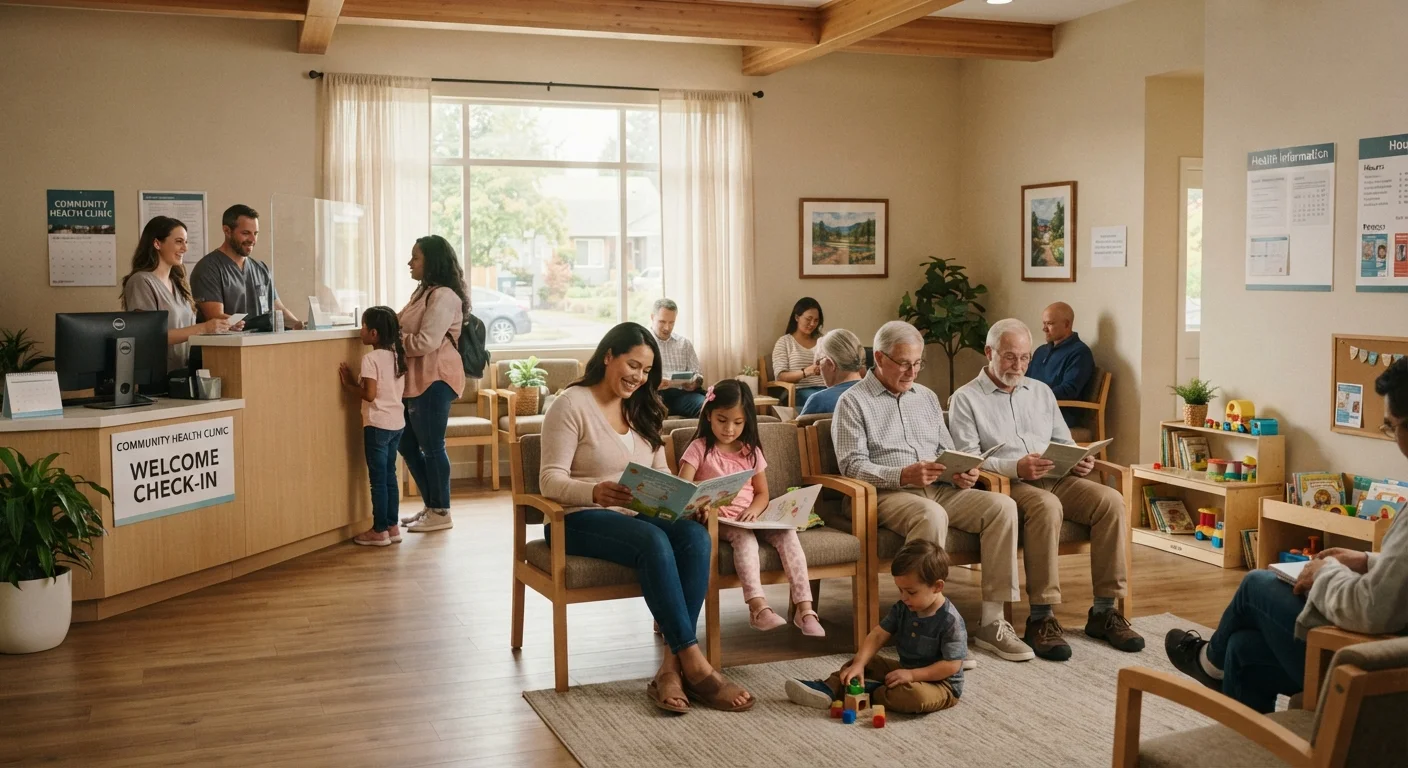
Photo credit: grub-cafe.com
Community health centers, sliding-scale clinics, and other publicly funded services can reduce your family's healthcare costs significantly.
Key Takeaways
- Federally qualified health centers charge on a sliding-scale fee based on household income.
- Many vaccines, screenings, and checkups are fully covered under the ACA with no cost-sharing.
- State children's health programs, school-based clinics, and public dental schools provide care at little or no cost.
- Prescription assistance programs from manufacturers and nonprofits can significantly reduce medication costs.
- Public libraries and extension services offer free health education, classes, and referral networks.
Why preventive care gets skipped
Cost is the most common reason American families delay or skip preventive care. A routine checkup, dental cleaning, or vision screening can feel like a luxury when the household budget is already stretched. What many families do not realize is that a network of publicly funded and community-supported resources exists specifically to close that gap.
The resources below are not widely advertised. They do not require navigating complex insurance paperwork in most cases, and several are available regardless of whether a family has coverage at all. Knowing where they are is the first step to using them. For a broader look at how routine skipped care quietly adds up, see where families overspend on health.
Federally qualified health centers (FQHCs)
FQHCs are community health centers funded by the Health Resources and Services Administration (HRSA). They are required by law to serve all patients regardless of insurance status or ability to pay, and they set fees on a sliding scale tied to household income and family size. For uninsured or underinsured families, an office visit can cost as little as a few dollars.
The HRSA maintains a publicly searchable locator at findahealthcenter.hrsa.gov where families can find the nearest site. Services typically include primary care, pediatric care, prenatal care, dental, behavioral health, and pharmacy. Because FQHCs must meet federal quality standards to receive funding, the care provided is not a lesser alternative; it is regulated primary care. If you are unsure how FQHCs compare to urgent care or emergency settings, this guide on choosing the right care setting breaks down the differences.
FQHCs set fees on a sliding scale, so visits can cost just a few dollars for low-income families.
ACA-mandated no-cost preventive services
Under the Affordable Care Act, most private health insurance plans and Medicaid expansion programs must cover a defined list of preventive services at no cost to the patient, meaning no copay or deductible applies when you see an in-network provider. The list, maintained by the U.S. Preventive Services Task Force and the CDC's Advisory Committee on Immunization Practices, includes blood pressure screening, cholesterol checks, depression screening, colorectal cancer screening, and a full schedule of childhood vaccines, among others.
Many families pay out of pocket for these services simply because they are unaware of the coverage or because a provider bills them incorrectly. Before any routine appointment, confirm with both your insurer and your provider that the service is coded as preventive rather than diagnostic. The Healthcare.gov website publishes the current full list of covered preventive services for adults, women, and children.
Most insured families owe nothing for covered preventive screenings when they see an in-network provider.
Children's health insurance programs and CHIP
The Children's Health Insurance Program (CHIP) provides low- or no-cost health coverage to children in families whose income is too high for Medicaid but too low to easily afford private insurance. Every state runs its own CHIP program, and coverage typically includes doctor visits, immunizations, dental care, vision care, hospital care, and mental health services.
Enrollment is open year-round, and families can apply through their state's Medicaid or CHIP office or through the federal Health Insurance Marketplace. Premiums, if any, are generally modest, and cost-sharing is limited for most services. Families who have checked eligibility in the past and been declined may qualify now if household income or family size has changed.
CHIP enrollment is open year-round and covers dental, vision, and mental health for eligible children.
School-based health centers and nurse referrals
More than 3,000 school-based health centers operate across the United States, according to the School-Based Health Alliance. These centers, located inside or adjacent to schools, provide primary care, mental health services, oral health screenings, and chronic disease management to students. Many operate on a sliding-scale or fully grant-funded basis, and they are designed to remove the logistical barriers (transportation, missed work, scheduling) that prevent families from accessing care.
Even schools without a full health center often have a nurse who maintains referral lists for community resources, free immunization clinics, vision assistance programs, and food-as-medicine initiatives. A direct conversation with a school nurse is often one of the fastest ways to surface local resources that are not easily found online.
A conversation with a school nurse can surface local free and low-cost resources faster than an online search.
Dental and vision schools
Accredited dental schools provide cleanings, fillings, extractions, X-rays, and in some cases more complex procedures at substantially reduced fees. Work is performed by supervised students who have completed their didactic training, and accreditation standards require the same infection control and clinical protocols as private practices. The American Dental Association maintains a directory of accredited programs.
Optometry schools similarly offer comprehensive eye exams and, in some cases, discounted eyewear. For families without dental or vision insurance, these programs can reduce costs by a significant margin compared with private-practice rates. Appointments often book several weeks out, so scheduling ahead of when a problem develops is practical.
Dental schools provide supervised professional care at a fraction of private-practice costs, with no compromise on safety standards.
Prescription assistance programs
Most major pharmaceutical manufacturers operate patient assistance programs (PAPs) that provide brand-name medications at no cost or reduced cost to patients who meet income criteria. NeedyMeds and RxAssist are two nonprofit directories that aggregate PAP information and allow families to search by drug name. Many state pharmaceutical assistance programs also exist for seniors and people with disabilities.
For generic medications, several large pharmacy chains run $4 or $10 generic drug programs, and GoodRx and similar tools function as discount cards that can be used at most pharmacies regardless of insurance status. A pharmacist is a good first point of contact for identifying which option produces the lowest cost for a specific prescription. Keeping overall healthcare spending in check connects directly to broader household financial planning.
Pharmacist guidance and nonprofit PAP directories can cut prescription costs significantly for uninsured or underinsured families.
Public health department clinics
County and city public health departments operate clinics that offer immunizations, sexually transmitted infection testing and treatment, tuberculosis testing, family planning services, and WIC (Women, Infants, and Children) nutrition support. Many of these services are free or charge only a nominal administrative fee. Public health departments are also the primary source of free vaccines during community immunization drives.
Hours and service offerings vary by county, but most departments publish their schedules and fee structures online. For families without a regular primary care provider, public health clinics can fill gaps in routine preventive care while a longer-term arrangement is established. Pairing these services with sound nutrition habits costs little; this overview of affordable nutrition covers evidence-based food strategies that complement preventive care.
County health department clinics provide vaccines, screenings, and nutrition support, often at no charge.
Making the most of what is available
These resources work best when families treat them as a regular part of their health routine rather than a last resort. Scheduling an annual checkup at a community health center, confirming which preventive services your insurance must cover at no cost, and asking a school nurse about local programs can all happen within a single week. Our annual checkup preparation guide walks through what to track and ask at each visit.
Mental health access follows similar patterns. School-based counselors, community mental health centers, and nonprofit hotlines exist in most counties. For a practical overview, see mental health support options for families on a budget.
Ask about fees before every appointment
When scheduling any visit at a community health center or clinic, ask directly whether a sliding-scale fee applies and what documentation (such as a recent pay stub or tax return) you should bring. Many families pay full fees simply because they did not know to ask. A single conversation at check-in can make a substantial difference in what you owe.
This article is for general informational purposes only and is not medical advice. Consult a qualified healthcare professional for guidance specific to your family's health needs.

Author
Health & Wellness Editorial Team
Health & Wellness Editorial Team is the collective byline for our editorial team and contributor network. Articles published under this byline or an editorial pen name are researched, written, and reviewed according to our editorial standards for clarity, consistency, and independence before publication.
View all articles →