
What Is Weatherstripping and Why Does It Matter for Your Energy Bill
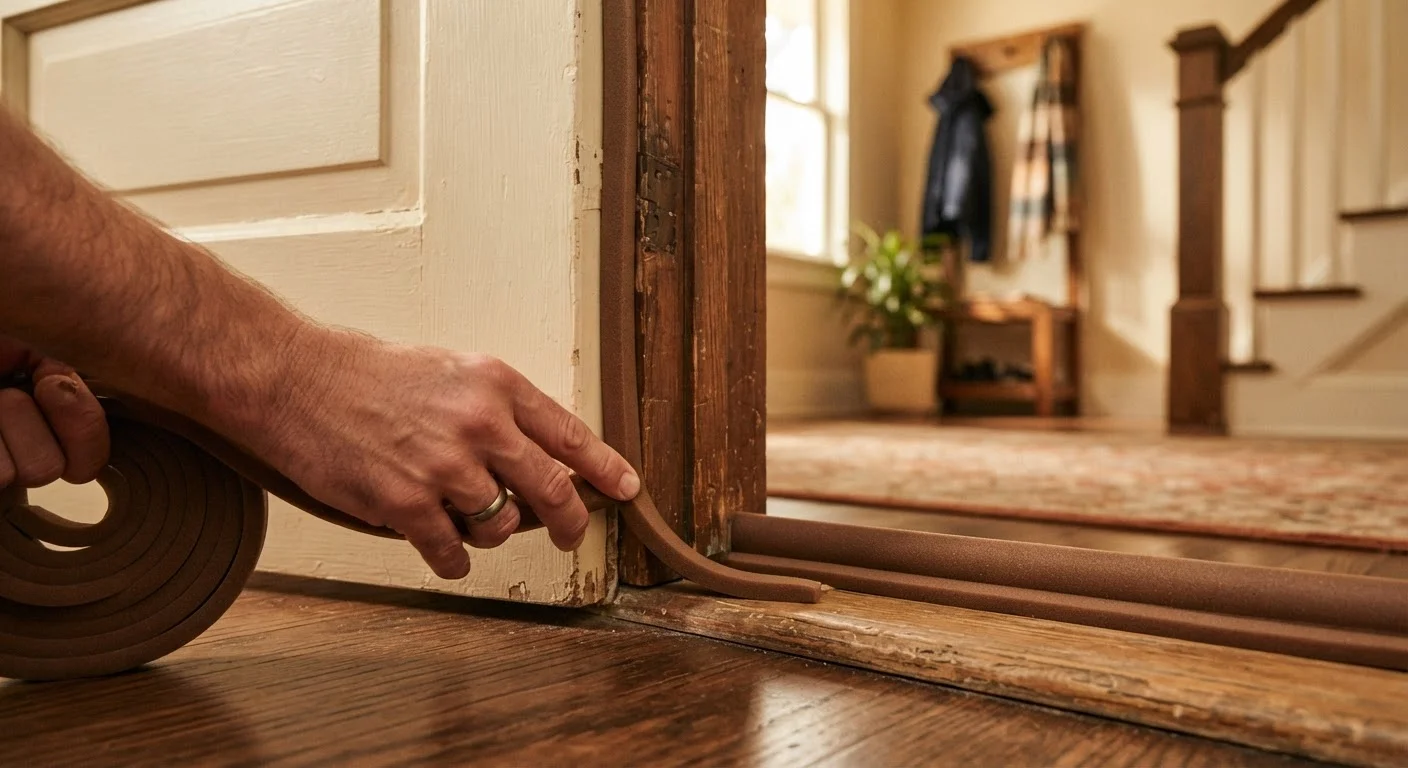
Photo credit: grub-cafe.com
In this article
Weatherstripping seals gaps around doors and windows. This explainer covers how it works, why it reduces heating and cooling costs, and common material types.
Key Takeaways
- Weatherstripping seals the gaps between movable parts of doors and windows and their frames.
- Air leaking through those gaps can account for a meaningful share of a home's heating and cooling energy use.
- Several material types exist, each suited to different locations and levels of wear.
- Most weatherstripping can be installed without professional help using basic household tools.
- Worn or compressed weatherstripping loses effectiveness and should be replaced periodically.
What weatherstripping actually does
Every exterior door and operable window in a home has a small gap where the moving part meets its frame. Those gaps are intentional: they allow the door or window to open and close freely. The problem is that the same gap lets conditioned air escape and outside air infiltrate, a process called air leakage or infiltration.
Weatherstripping fills that gap with a compressible or flexible material. When the door closes, the material compresses just enough to create a seal without making the door hard to operate. When the door opens, the material springs back. The result is a barrier that reduces the exchange of air between inside and outside.
Beyond temperature, a proper seal also limits the entry of moisture, which can contribute to mold growth, and insects, which find their way in through even small openings.
Check for gaps on a windy day
Drafts are easier to detect when outdoor wind pressure is pushing air through gaps. Run your hand slowly around the perimeter of a closed exterior door on a cold or windy day. Even without tools, you can usually feel air movement at problem spots. This quick test helps you decide which doors and windows to address first.
Why it matters for your energy bill
The U.S. Department of Energy has published guidance noting that air leaks through openings in the building envelope, including gaps around doors and windows, can account for 25 to 40 percent of the energy used for heating and cooling in a typical home. Weatherstripping addresses one specific category of those leaks.
When outside air enters during winter, your furnace runs longer to compensate. In summer, hot and humid air coming in makes air conditioning work harder. Both scenarios increase energy consumption and, in turn, utility costs. Sealing the gaps with intact weatherstripping reduces the load on both systems.
The savings are not uniform across every home. A newer house built to modern energy codes typically has tighter construction than a home built several decades ago. Older homes, or any home where the existing weatherstripping is worn or missing, tend to see more noticeable improvements after resealing.
25-40%
Share of home energy used for heating and cooling lost to air leaks
According to U.S. Department of Energy guidance on home air sealing and insulation.
$0.50-$15
Typical cost per foot for common weatherstripping materials
General price range across foam tape, V-strip, and door sweeps available at hardware retailers; costs vary by type and region.
Common weatherstripping materials and where each is used
Material choice depends on where the seal needs to go, how much friction or compression it will experience, and your budget.
- Foam tape is the most accessible option. It comes with a peel-and-stick adhesive backing and works on irregular gaps. It compresses easily, which makes it suitable for double-hung windows and door frames that see moderate use. It is the least durable of the common options.
- V-strip (tension seal) is a folded piece of plastic or metal installed inside the channel of a window or along the side of a door frame. It does not rely on compression, so it holds up well on frequently used doors. Installation requires a bit more care to cut and seat correctly.
- Door sweeps seal the gap at the bottom of a door, an area foam tape cannot address effectively. They attach to the interior face of the door and drag along the threshold. Some designs have a rubber or brush seal; others use a vinyl flap.
- Reinforced silicone or rubber gaskets are the material found on most modern doors as the factory-installed seal. Replacement versions are available for doors where the original gasket has torn or pulled away from the stop molding.
Metal-backed versions of V-strip and some door sweeps cost more upfront but last longer, making them worth considering for exterior doors in climates with temperature extremes.
What to check before you buy
Measure the gap you need to seal before purchasing material. Run your fingers along the door stop and frame with the door closed to feel where air is moving. Check the bottom of the door separately, since many older homes have a visible gap there even when everything else looks intact.
Inspect what is already there. Existing foam tape that is still adhered but fully compressed is no longer sealing anything and needs to come off before new material goes on. A door that has swelled, warped, or shifted in its frame may need adjustment before weatherstripping will seat properly. In those cases, the door alignment is the underlying problem, and weatherstripping alone will not solve it.
Local hardware stores stock most common types. Bring measurements and, if possible, a photo of the frame so staff can confirm you are selecting the right profile for the gap you have.
An older farmhouse has a front door that lets in a visible draft during winter. The homeowner presses a piece of tissue near the frame and watches it flutter on all four sides.
A family notices their upstairs bedroom is harder to keep cool in summer despite the central air running continuously. The double-hung windows in that room have no weatherstripping.
A homeowner replaces a worn door sweep on a back door that connects to an attached garage.
Frequently Asked Questions

Author
Home and Garden Editorial Team
Home and Garden Editorial Team is the collective byline for our editorial team and contributor network. Articles published under this byline or an editorial pen name are researched, written, and reviewed according to our editorial standards for clarity, consistency, and independence before publication.
View all articles →