
Why "Healthy Eating Is Expensive" Is Only Half the Story
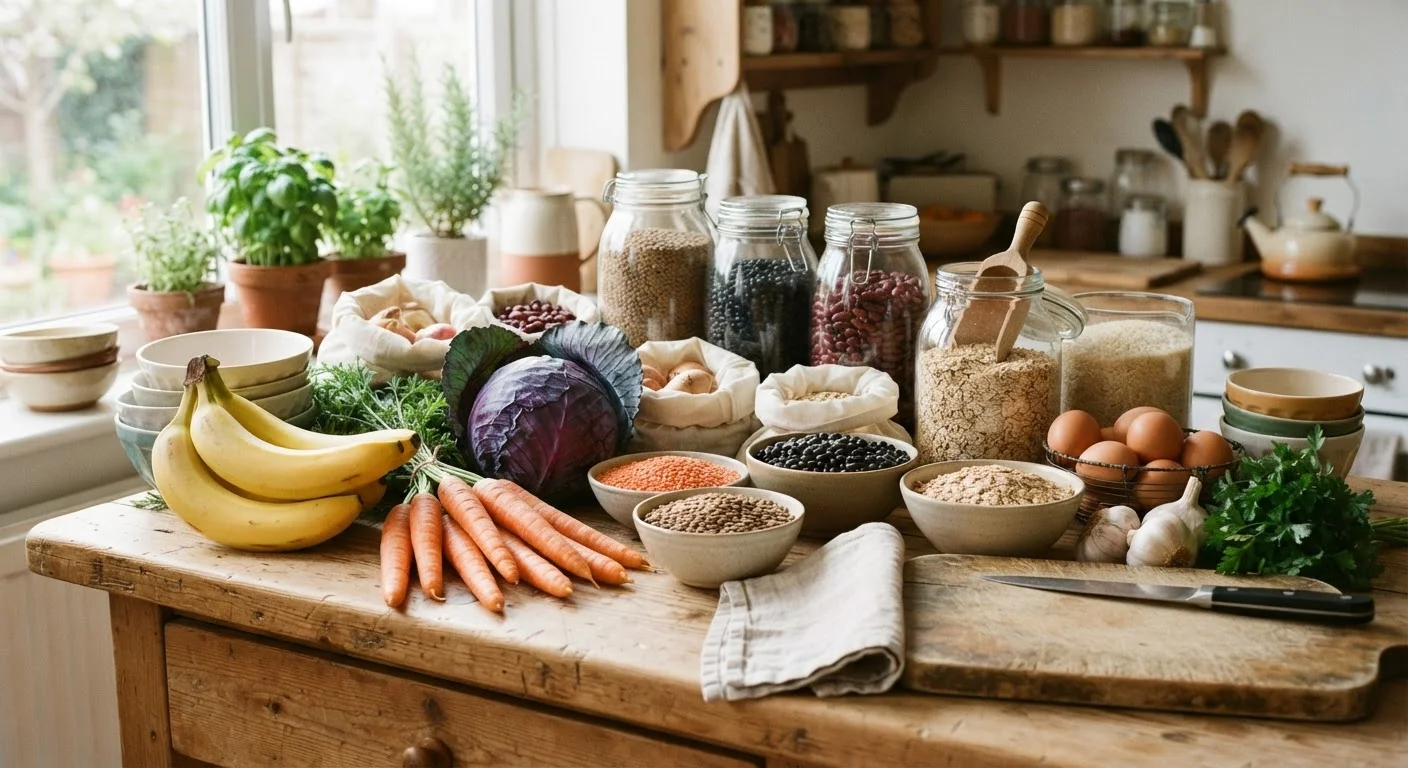
Photo credit: grub-cafe.com
In this article
Separating common misconceptions about the cost of nutritious food from what the evidence actually shows about affordable dietary patterns.
Key Takeaways
- Many of the most nutrient-dense foods, such as beans, lentils, oats, and frozen vegetables, are consistently among the least expensive items per serving.
- Comparing food costs by calorie or nutrient rather than by package price changes the picture significantly.
- Cooking patterns, food waste, and portion choices often affect the total food bill more than ingredient quality.
- Federal nutrition assistance programs exist specifically to help lower-income families access adequate nutrition.
How the myth took hold
The belief that eating well automatically costs more is understandable. Grocery store layouts place premium products at eye level, and marketing consistently ties health claims to higher price tags. When a bag of kale chips costs three times as much as a bag of potato chips, the comparison feels obvious.
The problem is that neither kale chips nor potato chips are a useful benchmark for a nutritious diet. The comparison that actually matters is between whole, minimally processed foods and the ultra-processed alternatives most households already buy. When researchers at the Harvard T.H. Chan School of Public Health compared dietary patterns on that basis, the cost difference narrowed to roughly $1.50 per person per day, a gap that is real but far smaller than most people assume.
Price alone also tells an incomplete story. Food waste, portion sizes, and how often families eat out all shape the true cost of a household's diet. Common spending patterns that inflate health costs often have more to do with habits than ingredient choices.
Myths and the evidence behind them
The following pairs address the most common misconceptions families encounter when trying to eat better without spending more.
Myth
Fresh vegetables and fruit are too expensive for families on a tight budget.
Fact
Frozen and canned produce without added salt or sugar delivers comparable nutrition to fresh at a fraction of the cost.
Freezing and canning preserve most vitamins and minerals at the time of harvest. A study published in the Journal of the Academy of Nutrition and Dietetics found no clinically meaningful difference in nutrient content between frozen and fresh vegetables for most common varieties. A bag of frozen spinach or a can of no-salt-added diced tomatoes costs considerably less per serving than the fresh equivalent, particularly outside of peak season.
Myth
Protein is the most expensive part of a healthy diet, making it hard for budget households to get enough.
Fact
Plant-based proteins such as dried lentils, black beans, chickpeas, and eggs are among the most affordable protein sources available.
Dried lentils and beans cost pennies per serving and are shelf-stable for months. Eggs remain one of the lowest-cost complete protein sources per gram of protein. The Dietary Guidelines for Americans explicitly recognize legumes as both a vegetable and a protein food, and the USDA's MyPlate resources include budget-friendly meal plans built around them. Families do not need to center meals on meat to meet protein needs.
Myth
Whole grains always cost more than refined grains, so switching is a luxury.
Fact
Oats, brown rice, and whole wheat flour are widely available and often comparable in price to their refined counterparts.
Plain rolled oats are consistently one of the lowest cost-per-serving breakfast options in the grocery store, whole grain or otherwise. Brown rice and whole wheat pasta are priced similarly to white rice and white pasta at most large grocery stores. The premium, where it exists, tends to apply to specialty or branded products rather than to whole grains as a category.
Myth
Eating healthy requires buying organic, which is beyond most families' budgets.
Fact
Organic certification is not required for a nutritious diet, and conventional produce carries no established safety risk for most people.
Major health organizations, including the American Cancer Society and the Academy of Nutrition and Dietetics, state that eating more fruits and vegetables regardless of whether they are organic is the dietary priority, not organic status. Conventional produce goes through regulatory pesticide residue monitoring by the EPA and FDA. Families who want to reduce pesticide exposure without spending more can focus on produce with thick peels, which are typically not eaten, and wash all produce before use. The decision to buy organic is a personal one; it is not a prerequisite for eating well.
[warning_callout]What actually moves the needle on food costs
Research on household food spending points consistently to a few factors that matter more than whether someone buys organic produce. Food waste is one of the largest. The USDA estimates that American households discard roughly 30 to 40 percent of the food supply, and most of that loss happens at the consumer level. Reducing waste by planning meals around what is already in the refrigerator can lower the effective cost of eating well more than switching to cheaper ingredients.
Cooking frequency is another factor. A family that cooks dried beans from scratch spends a fraction of what a family spends on the same quantity of canned or restaurant-prepared beans. The nutrition is comparable; the difference is time and habit. Nutrition science on eating well without overspending covers practical strategies for building those habits on a real budget.
For families who are food-insecure, federal programs including SNAP (Supplemental Nutrition Assistance Program) and WIC (Special Supplemental Nutrition Program for Women, Infants, and Children) provide targeted support. Information on eligibility is available through the USDA Food and Nutrition Service.
This article is for general informational purposes only and does not constitute medical or nutritional advice. Consult a registered dietitian or qualified healthcare professional for guidance specific to your family's needs.

Author
Health & Wellness Editorial Team
Health & Wellness Editorial Team is the collective byline for our editorial team and contributor network. Articles published under this byline or an editorial pen name are researched, written, and reviewed according to our editorial standards for clarity, consistency, and independence before publication.
View all articles →