
Your Car's Maintenance Schedule, Explained
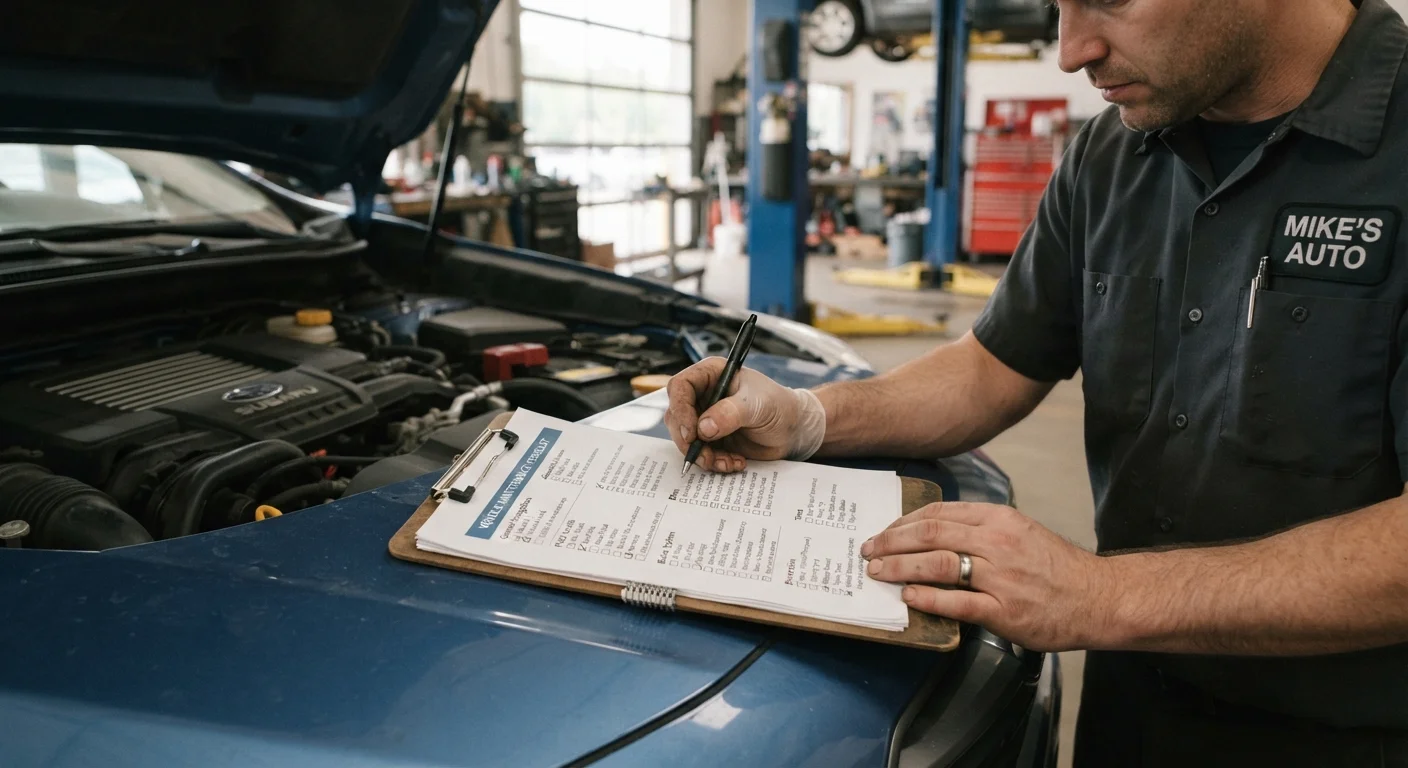
Photo credit: grub-cafe.com
In this article
Confused by your owner's manual maintenance intervals? Learn what each service milestone means and why skipping them costs more in the long run.
Key Takeaways
- Your owner's manual contains the only maintenance schedule written specifically for your vehicle.
- Most services are triggered by mileage, time elapsed, or whichever comes first.
- Skipping routine maintenance typically leads to repair costs that far exceed the service you avoided.
- Oil change intervals vary widely by vehicle and oil type, so the old 3,000-mile rule no longer applies universally.
- Both dealer service centers and independent mechanics can perform scheduled maintenance competently.
What the schedule actually is
Your owner's manual contains two things most drivers ignore: the warranty terms and the maintenance schedule. The schedule is a table, usually organized by mileage intervals (15,000, 30,000, 60,000 miles and so on), that lists every component the manufacturer wants inspected, adjusted, or replaced at each stage of the vehicle's life.
Each entry is based on how long a part is designed to last under normal operating stress. Spark plugs in many modern engines last 60,000 to 100,000 miles. Coolant may go five years before it needs flushing. Brake fluid absorbs moisture over time, so it is often on a time-based interval regardless of mileage. The schedule accounts for all of these differences so you do not have to guess.
One thing drivers frequently miss: schedules list whichever comes first, mileage or time. If you drive 8,000 miles a year and your oil change is specified at 7,500 miles or 12 months, the 12-month mark triggers the service even though you are under the mileage threshold.
The services that matter most at common intervals
Not every line on the schedule carries equal weight. Some services protect the engine and drivetrain, where repair costs run into thousands of dollars. Others are lower-stakes but still affect comfort and safety.
- Engine oil and filter: The most frequent item on any schedule. Old oil cannot lubricate moving parts properly. For a deeper look at how intervals are actually determined, see what mileage numbers actually mean.
- Tire rotation: Tires wear unevenly based on their position on the vehicle. Rotating them on schedule extends tire life and can improve handling.
- Brake inspection: Brake pads wear down gradually. An inspection at regular intervals catches thin pads before they damage rotors, which cost significantly more to replace.
- Air filters (engine and cabin): A clogged engine air filter restricts airflow and can affect fuel economy. Cabin filters affect interior air quality and HVAC performance.
- Timing belt or chain: Not all vehicles have a timing belt (many use a chain instead), but those that do have a firm replacement interval. A snapped belt causes catastrophic engine damage.
- Coolant flush: Coolant degrades over time and becomes acidic, which can corrode cooling system components. A flush removes old fluid before it causes damage.
Set a mileage reminder now
Write your current odometer reading on a sticky note inside your glove box along with the mileage for your next three scheduled services. Many smartphones also let you set recurring reminders tied to calendar dates. Catching a service before a warning light appears is almost always cheaper than waiting for a symptom.
Why skipping services costs more
The math is straightforward. A routine oil change costs between $50 and $100 for most vehicles. An engine replacement, which is a realistic consequence of persistent oil neglect, can run $4,000 or more depending on the vehicle. The same logic applies across the schedule.
$500-$700
Typical annual scheduled maintenance cost
AAA estimates that the average American driver spends roughly $500 to $700 per year on routine vehicle maintenance, a figure that varies by vehicle type and age.
$4,000+
Average engine replacement cost
RepairPal and similar automotive data sources place the average cost of a passenger vehicle engine replacement well above $4,000, including parts and labor.
35%
Share of vehicles overdue for an oil change
Vehicle inspection data compiled by automotive service organizations has found that a substantial share of vehicles on U.S. roads are past their recommended oil change interval at any given time.
Deferred maintenance also compounds. When one system is stressed because a related service was skipped, wear spreads. A clogged transmission filter, for example, causes the transmission fluid to overheat, which accelerates wear on internal components. The filter service costs far less than a transmission rebuild.
For a broader view of which small problems escalate fastest, this article on small problems turning expensive is worth reading before your next service visit.
Where to get scheduled maintenance done
You have two main paths: a dealership service center or an independent mechanic. Both can perform most scheduled services competently. The choice often comes down to your vehicle's age, whether it is under warranty, and what a specific service requires in terms of tools and software.
Dealers have access to manufacturer-specific diagnostic software and original parts, which matters more for newer vehicles or complex electronic systems. Independent shops typically charge lower labor rates and can be a practical choice for straightforward services on older vehicles. Weighing the trade-offs between dealer and independent service covers both options in more detail.
Wherever you take your vehicle, ask for a written service record and keep every receipt. Documentation protects your warranty rights and gives you a clear picture of what has been done when you eventually sell the vehicle.
If you want to handle some tasks yourself, basic car maintenance for new owners outlines which jobs are accessible without specialized tools. For safety-related work such as brakes, steering components, or anything involving fuel or electrical systems, a qualified mechanic should do the job.
Frequently Asked Questions

Author
Automotive Editorial Team
Automotive Editorial Team is the collective byline for our editorial team and contributor network. Articles published under this byline or an editorial pen name are researched, written, and reviewed according to our editorial standards for clarity, consistency, and independence before publication.
View all articles →